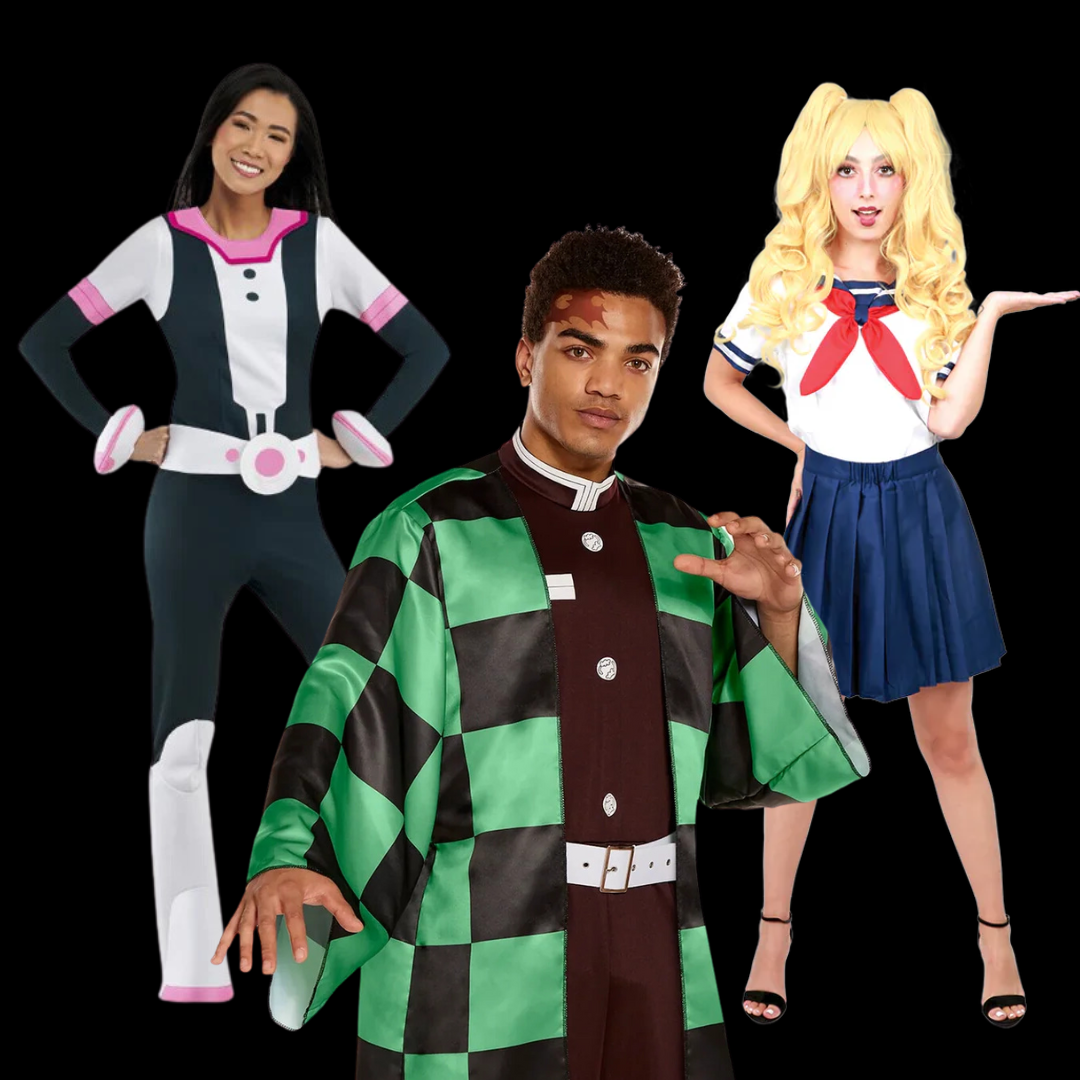
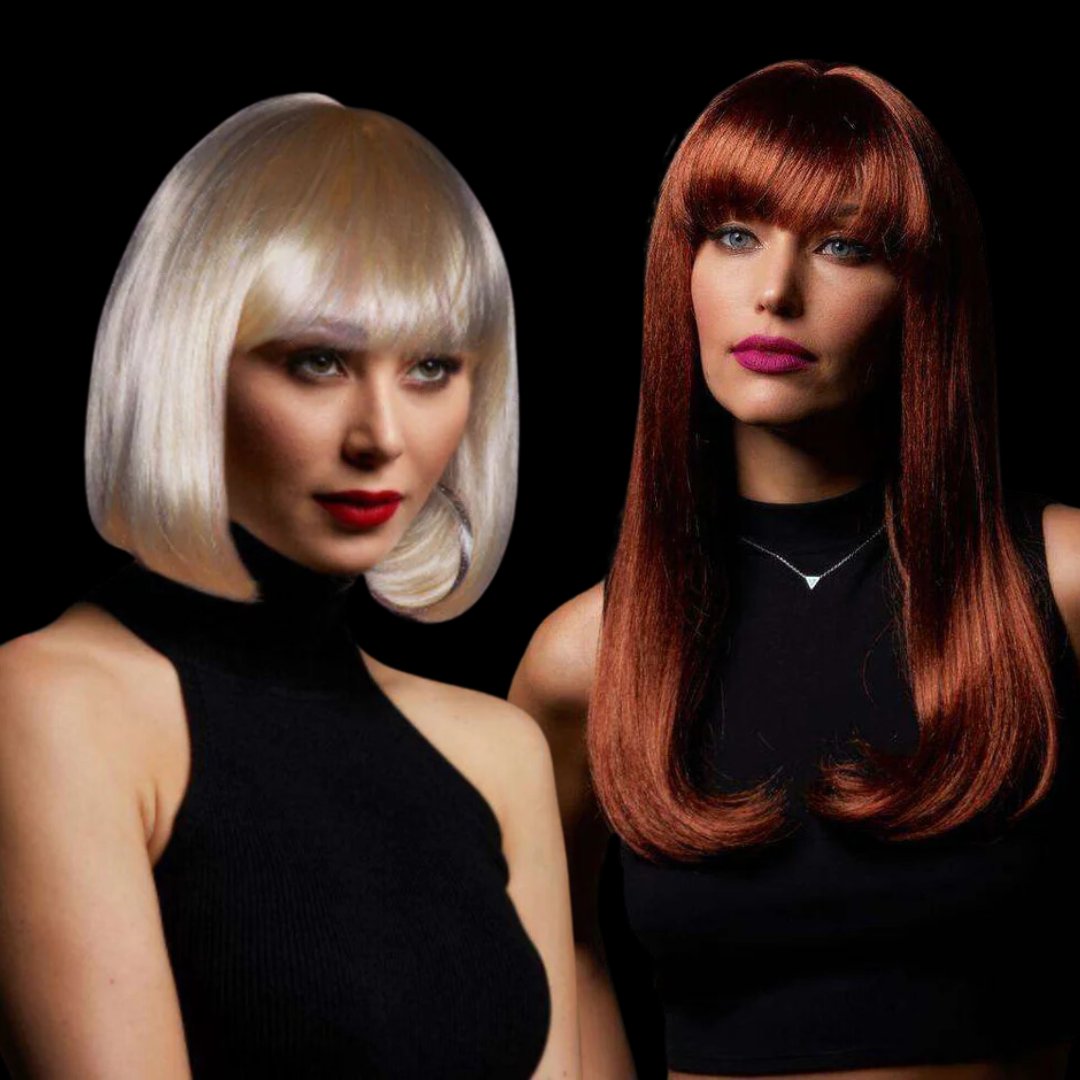
A costume wig is the fastest way to turn a plain outfit into a character people recognize from across the room. It changes your silhouette, hides hair that does not belong to the story, and lets you play roles your own haircut never could: a platinum anime hero, a candy-colored villain, a Victorian widow with waist-length curls. This guide covers choosing the right wig, fitting the cap, styling with heat safely, and storing the piece so it survives season after season.
Disclosure: This post contains affiliate links. If you buy through them, we may earn a commission at no extra cost to you.
Start With the Character, Not the Wig
Before you open a single product photo, write down three things: hair color, hair length, and silhouette. Color is the obvious one — Wednesday Addams needs a center-parted black braid, Harley Quinn needs two-tone pigtails, a masked trooper needs no visible hair at all. Length matters more than shoppers expect: shoulder-length hair photographs differently from a waist-length cascade, and a bob changes how a collar or hood sits. Silhouette is the detail everyone skips: a styled cosplay wig holds its shape upward and outward, while a loose wavy Halloween wig falls wide and soft.
With those notes in hand you can filter listings fast and avoid the classic buying error: choosing a wig because the model wears it well instead of because it matches the character. For classic monster hair — Dracula’s slicked-back black, the Bride of Frankenstein’s towering white streak — our Halloween Classics ideas pair the wig with the right costume.
The Main Costume Wig Types
Every costume wig falls into one of a few construction types, and the type matters more than the color on the tag.
Lace front wigs
A lace front has a sheer mesh strip along the hairline with strands knotted into it. Trimmed and blended, it mimics hair growing from your own scalp, which matters the moment your forehead is visible — no hat, hood, or mask to hide the transition. It is the standard for realistic characters and close-up photos. The trade-off is care: the lace is delicate, must be trimmed on first wear, and many wearers use a light adhesive to keep the edge flat all night.
Basic full-cap wigs
A basic cap is the classic build: a stretch cap with machine-sewn wefts and a closed crown. It goes on in seconds, tolerates a range of head sizes, costs less, and is usually dense enough that a wig cap underneath is all you need. It is the practical pick when most of the wig will be covered by a hat, hood, helmet, or tiara anyway.
Long, short, and colored styles
Long wigs offer the widest styling range — braids, ponytails, updos — but they tangle fastest and feel heavier after a few hours. Short wigs stay neat with zero effort and suit first-time wearers. Colored wigs arrive in natural and vivid tones, and vivid fibers are almost always synthetic, which limits heat styling. If the costume is already loud, choose a calmer wig so the look still reads from ten feet away.
Cap Size and Fit
Most costume wigs ship as one size with a stretch cap covering roughly 21 to 23 inches of head circumference, which fits most adults. Measure with a soft tape: front hairline, over one ear, around the back of the head, and up to the other side, then compare that number to the range printed in the listing instead of trusting the phrase “one size.”
Fit also depends on what sits under the cap. Thick or curly hair needs a wig cap to compress everything into a smooth base, and a high bulky bun pushes the wig off-center so the part lands in the wrong place. Between sizes, choose the larger cap and tighten the adjustable straps at the nape; a snug cap feels fine for ten minutes and miserable by hour three. Shoppers who want to judge cap construction and fiber density in person can visit a local costume shop, and character-by-character guidance lives in our Costumes category.
Synthetic Fiber vs Heat-Friendly Fiber
Standard synthetic
Most costume wigs use standard synthetic fiber. It holds its factory style permanently, survives humidity without drooping, and never needs restyling — but heat is the enemy. A flat iron can melt it on contact, sometimes as an instant sticky patch you only notice under bright light. Low-end fiber also looks glassy in photographs; a dusting of dry shampoo on the part line knocks the shine down.
Heat-friendly synthetic
Heat-friendly fiber can be reshaped with tools, usually up to about 250 to 300 degrees Fahrenheit, which covers straightening, crimping, and soft curls. It looks more natural, but the style drops in rain and has to be re-set after washing. Read the stated heat limit, start at the lowest setting, and test a hidden section first. Human hair wigs exist too, but for costumes they are rarely worth the maintenance.
Whatever fiber you pick, browse costume wigs sorted by fiber and length and confirm the heat rating before you settle on a color.
Your First-Wear Routine
A wig worn straight from the bag always looks like a wig. Three steps, done within about an hour, fix that.
Trim the lace
Only for lace front models. Turn the wig inside out, follow the hairline edge of the lace, and cut along it with small sharp scissors, tracing the hairline rather than cutting straight across. Leave a millimeter or two of lace instead of cutting flush into the knots, and never cut into the hair itself. You can always remove more later, but you cannot add lace back.
Wash before you wear
Rinse in cool water with mild or wig-safe shampoo, comb with a wide-tooth comb starting at the ends, and air-dry on a stand. Washing removes factory dust, loose fibers, and the flat packaged shape. Press the water out with a towel; never wring the wig.
Style on a stand
Pin the wig to a foam head or adjustable stand with two or three steel pins through the crown, never the hairline. Your own head is a poor workbench: you cannot see the back, and you will over-comb the front. Style the underneath layers first, and let everything set before you move the piece.
Styling Tools and Heat Settings
Once the fiber type is confirmed, the tool list stays short: a wide-tooth comb, a wig brush, steel pins, a clipless curling wand or flat iron with a temperature dial, and a firm-hold hairspray formulated for synthetic fiber. Human-hair products often contain heavy oils that weigh costume fibers down and leave them looking greasy instead of styled.
Heat discipline prevents nearly every styling disaster. Start at the lowest effective temperature — around 250 degrees Fahrenheit for heat-friendly fiber — and never exceed the manufacturer’s maximum. Work on a hidden section first and let it cool completely before judging the result, because synthetic fiber sets as it cools rather than as it heats. Pin each curl until it reaches room temperature, and keep the iron away from the lace edge, since heat welds lace into a stiff line that will never lay flat again. When your kit is ready, shop costume wigs designed to be restyled. Finished looks to copy live in our Costume Guides.
Care, Storage, and the Mistakes That Ruin Wigs
After an event, let the wig air out for an hour before storing it. Comb from the ends upward and never yank through a knot: hold the fiber above the tangle and tease the knot apart, or you will pull wefts loose and create a bare patch. Store it clean, dry, and uncompressed — on a stand, or gathered loosely into a hairnet and a breathable bag so nothing presses the style flat. Keep it away from car dashboards, radiators, and candles, because synthetic softens at temperatures you would not consider dangerous.
Wash only when the wig actually looks or feels dirty; frequent washing fades color and softens the curl pattern. Sleep, swim, and shower in something else entirely. Costume shops also carry the brushes, stands, and wig caps that make this routine easy to keep up.
The predictable mistakes are worth naming: skipping the wig cap so dark hair shows through the part; cutting the lace too close and lifting the hairline; trimming bangs without measuring twice; touching a standard-synthetic wig with a hot tool; choosing a color under warm bathroom light that turns brassier in daylight; and using heavy human-hair conditioners that leave fibers limp. Check shades in natural daylight, and when you are between two colors, order the darker one — a wig can be deepened, but it cannot be lifted.
Your Costume-Wig Shopping Checklist
Run through this list before you pay for anything:
- Character notes written down: color, length, silhouette.
- Head circumference measured and matched to the listing’s cap range.
- Fiber type identified, with a stated heat limit if you plan to restyle.
- Lace front chosen only when the hairline will actually be visible.
- Product photos shot in realistic lighting, not only under studio glare.
- Wig cap, comb, and stand budgeted alongside the wig itself.
- Return or exchange policy checked, because shade mismatches happen.
A wig that clears that list will not need a rescue attempt on party night. Follow the first-wear routine, store it on a stand, and the same piece will serve you through conventions, photo shoots, and several Halloweens. When your checklist is complete, compare costume wigs side by side and secure your color before the season’s most popular shades sell out.